
If you are preparing to run a 5K, pre-race anxiety is probably already kicking in. With it comes the classic question: what should I eat the day before and for breakfast so I don’t “bonk” halfway through?
The biggest mistake amateur 5K runners make is treating the race as if it were a marathon, eating giant plates of pasta the night before. The raw truth of sports nutrition is that, for a 5K, your greatest ally is not abundance; it is lightness.
The Physiology of a 5K: Your Tank is Already Full
Unlike a half-marathon, a 5K is a high-intensity, short-duration race (usually lasting between 15 and 40 minutes, depending on your level).
The human body stores energy as glycogen in the muscles and liver. A normal daily diet already guarantees enough glycogen stores to sustain around 60 minutes of intense effort, as long as it is balanced. In other words, at the starting line of a 5K, your energy tank is already naturally full. You do not need an intense carbo-loading phase.
What can be done the day before is to slightly increase the amount of carbohydrates consumed, but not excessively. This way, you ensure your muscles will have enough energy for the race. However, there is no need to worry as much about this as you would for a longer event.
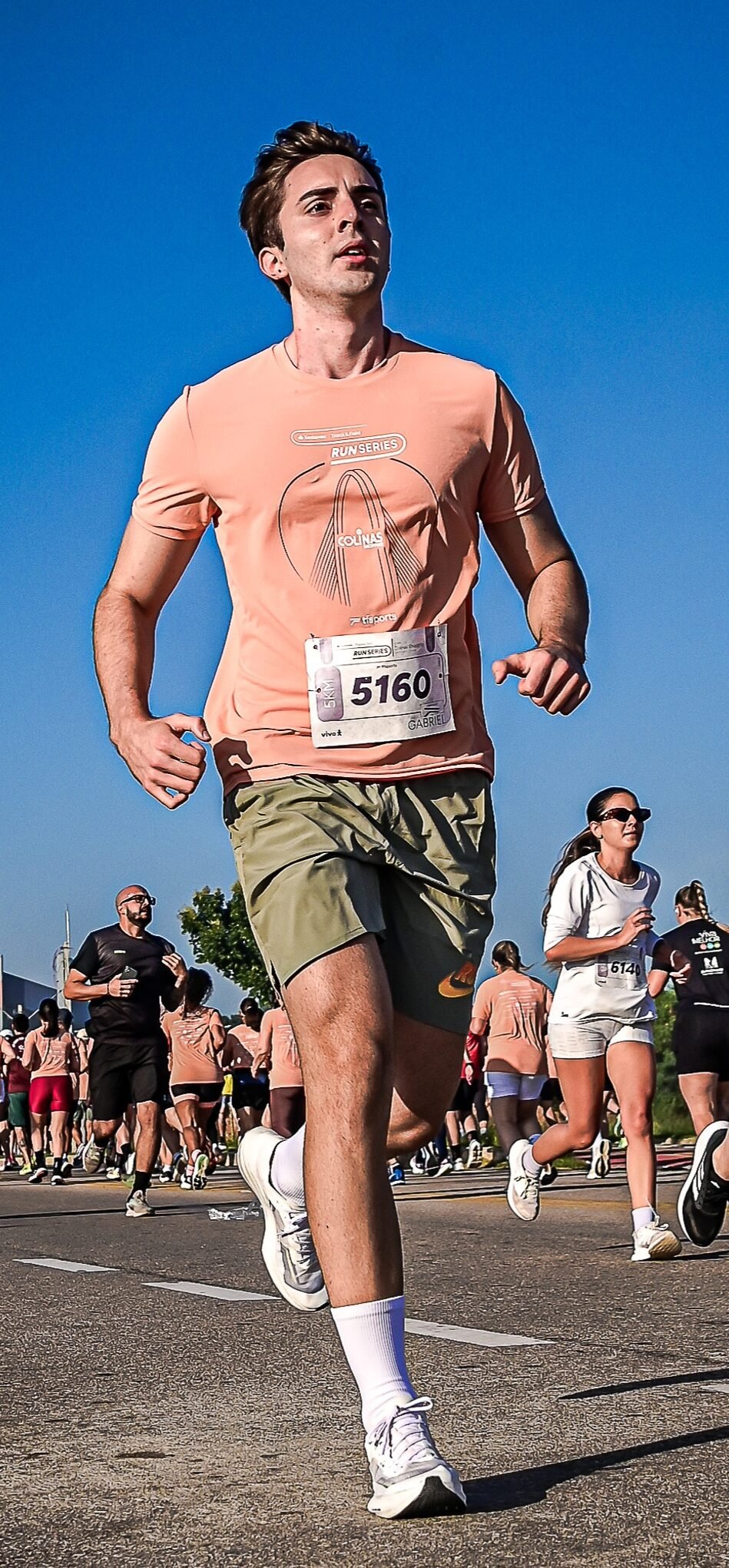
The Golden Rule: 100% Resolved Digestion
To perform well in a 5K, you need to arrive at the starting line feeling light and with an empty stomach, but with stable blood glucose.
The focus of your pre-race breakfast should exclusively be gastric comfort. No testing new foods, no excess fiber, and above all, no large volumes.
Practical Guide for a 5K Morning
| Factor | What to AVOID | What to PREFER |
|---|---|---|
| Foods | Eggs, oats, whole milk, whole wheat bread | White bread with fruit jam, ripe bananas, lean cheeses, coffee, skim milk |
| Volume | Large meals (full plates) | A small snack (about 30g to 50g of carbohydrates) |
| Timing | Eating 30 minutes before the start | Eating 1.5 to 2 hours before the start |
| Supplements | Carbohydrate gels during the race (not enough time for absorption) | Just water (if you feel thirsty) |
What About Carb Gels Mid-Race?
This is one of the most frequent clinical questions. You do not need a carbohydrate gel during a 5K.
The time it takes for your body to absorb the gel in the gut and send it as energy to the muscle is approximately 15 to 20 minutes. By the time the energy from the gel finally reaches your legs, you will probably already have the medal around your neck.
Practical Verdict
Respect the distance, but don’t overeat. The day before, eat normal, balanced meals. On race morning, wake up early, eat a simple carbohydrate without overdoing it, and head to the starting line with digestion completely finished. To run fast, you need to be light.
By Gabriel Bueno Bocchi, Registered Dietitian / Sports Nutritionist (University of Campinas – UNICAMP)